
PVC
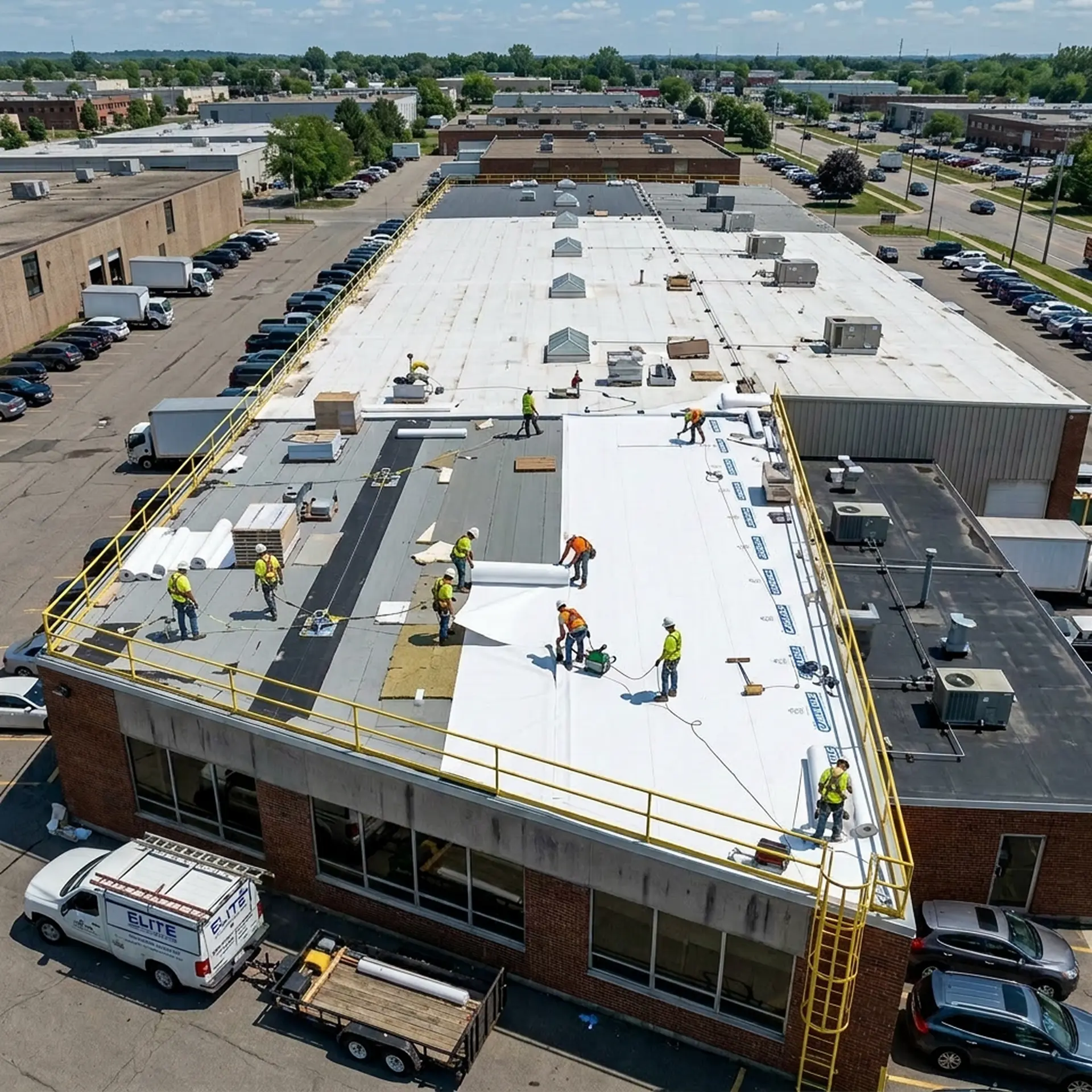
Built for harsh environments and chemical exposure.
PVC (Polyvinyl Chloride) is a reinforced single-ply membrane engineered for commercial roofs facing chemical exposure, grease-laden exhaust, and extreme weather. Its thermoplastic composition allows seams to be hot-air welded into a monolithic sheet, and its plasticizer formulation provides flexibility while maintaining resistance to punctures, oils, and bacterial growth.
-
Restaurants, kitchens, and food processing facilities
-
Chemical plants and manufacturing environments
-
Hospitals and laboratories with rooftop equipment
-
Coastal buildings exposed to salt air and high winds
Not all PVC membranes are created equal—formulation quality directly impacts long-term performance. Prism partners with premier PVC manufacturers to ensure every installation delivers the longevity and reliability your facility demands.
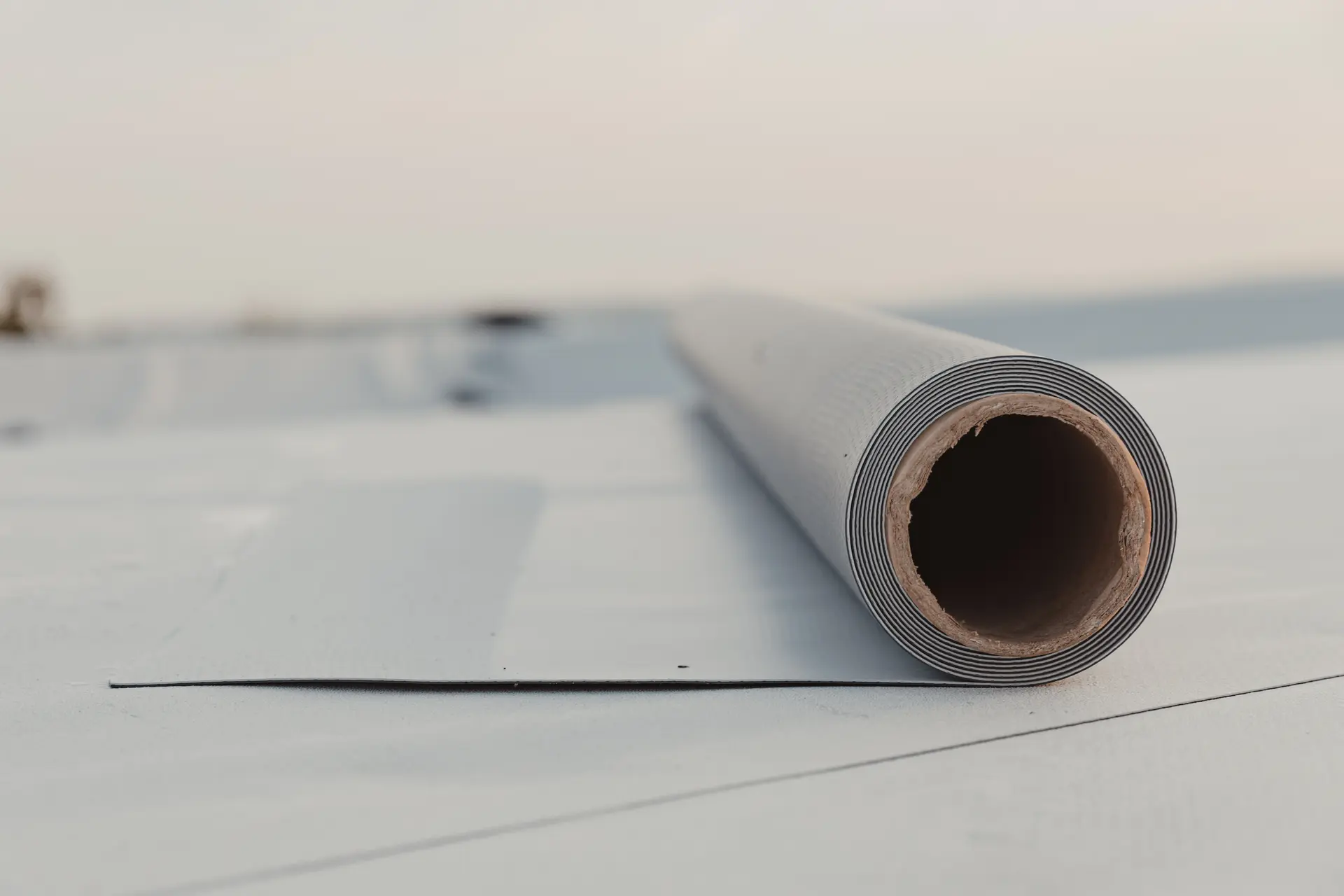
Chemical-Resistant. Fire-Rated. Field-Proven.
PVC stands apart from other single-ply membranes through its unique material properties and decades of documented performance.
-
Inert, impervious to animal fats/grease
-
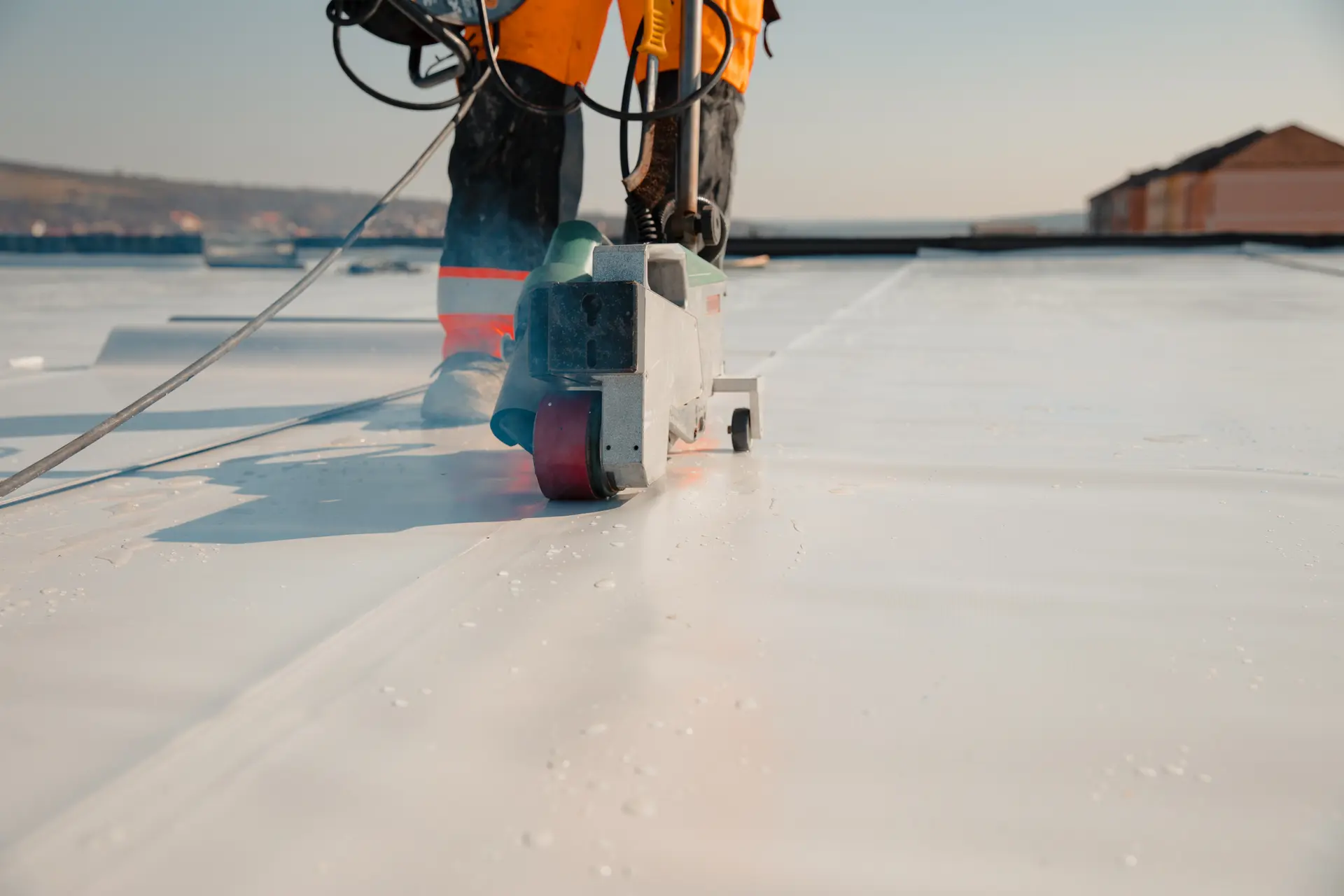
Heat-welded seams create watertight, lasting bonds
-
Lightweight system reduces structural load
-
Resistant to UV exposure and weathering
-
Cost-effective installation with long-term performance
Engineered installation for chemical-resistant performance.
A controlled process designed to achieve fully welded, monolithic membrane coverage with verified seam integrity at every stage.
PVC is a thermoplastic membrane reinforced with polyester and formulated with plasticizers for flexibility and chemical resistance. Seams are hot-air welded to form a continuous, monolithic sheet.
PVC roofs typically last 20–30 years when properly installed and maintained. Membrane thickness, UV stabilizer packages, and exposure conditions all influence long-term performance.
Both use heat-welded seams, but PVC's plasticizer composition gives it superior resistance to grease, animal fats, and chemical runoff. PVC is also self-extinguishing and has a significantly longer performance track record. TPO is often selected where chemical exposure is not a concern.
Hot-air welded seams fuse two layers of PVC into a single bond that is stronger than the membrane itself. Unlike adhesive or tape-based seams, welded joints will not degrade from chemical exposure or temperature cycling over time.
PVC Roofing FAQs
What is PVC roofing and where is it used?
PVC is a single-ply membrane with heat-welded seams, prized for its chemical, grease, and fire resistance. It's an ideal commercial roof for restaurants, labs, manufacturing, and any building with rooftop exhaust or chemical exposure.
How long does a PVC roof last?
A properly installed PVC roof typically lasts 20 to 30 years, with strong resistance to ponding water, chemicals, and UV exposure.
PVC vs. TPO — what's the difference?
Both are single-ply, heat-welded membranes. PVC excels where there's chemical or grease exposure and offers superior fire resistance; TPO is more economical for standard commercial roofs. We'll recommend the right membrane for your building's use and exposure.
